
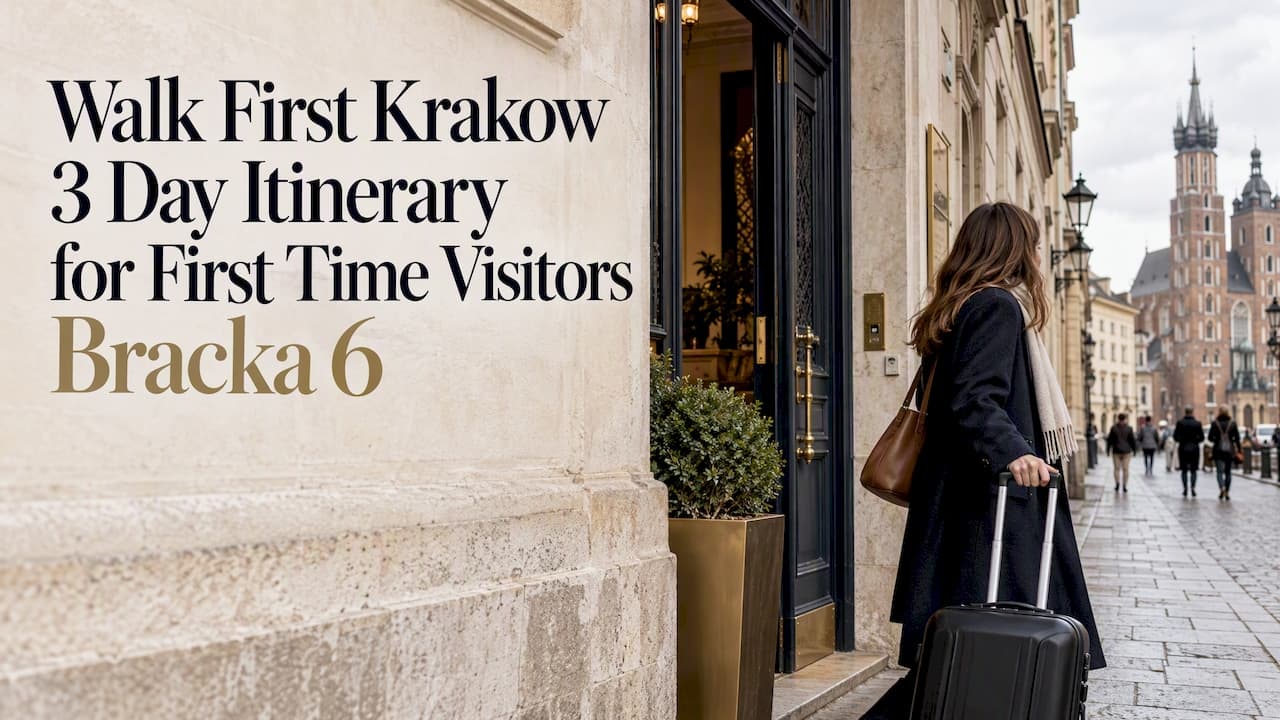
Three days in Krakow works best as a walk-first plan that clusters sights by neighborhood: Old Town and Wawel Hill on day one, Kazimierz and Podgórze on day two, and a single major day trip, either Auschwitz-Birkenau or the Wieliczka Salt Mine, on day three. Book Wawel tickets and Auschwitz guided tours in advance, and take the airport train for the fastest transfer into town. This sequence keeps transit time low and leaves room for relaxed evenings.
TL;DR:
- Pre-book Wawel State Rooms tickets early in the day to avoid queues and ensure availability for the major attractions.
- Book Auschwitz guided tours weeks in advance during peak season to secure preferred time slots and avoid missing out.
- Allocate at least two hours for Kazimierz's synagogues and ghetto memorials, and two to three hours for Schindler's Factory museum in Podgórze.
- Choose Wieliczka Salt Mine for a half-day visit with accessible routes, reserving tickets ahead especially on weekends; opt for Auschwitz guided tours if seeking a full historical experience.
- Use the SKA1 train from Krakow Airport for the fastest transfer into the city, and buy transit tickets in advance for trams and buses to save time and money.
Table of Contents
- Day 1: Old Town and Wawel on a walkable schedule
- Day 2: Kazimierz and Podgórze museums and memorials
- Day 3: Auschwitz-Birkenau or Wieliczka Salt Mine
- Airport transfers, city transport, and ticket timing
- Where to stay: Old Town versus Kazimierz
- Food and evenings worth planning around
- Why this pacing works, and how to adjust it
- Stay steps from the square at Bracka 6
- FAQ
- Sources
Day 1: Old Town and Wawel on a walkable schedule
Start early at Rynek Główny, Krakow's Main Market Square, before the crowds arrive. Climb St. Mary's Basilica tower for a view over the square, then browse the Sukiennice (Cloth Hall) stalls for amber jewelry and local crafts. Budget around two hours for this stretch.
From there, walk the Royal Route south toward Wawel Hill, a route lined with churches and townhouses that takes about 20 minutes on foot. At Wawel, the State Rooms and Crown Treasury use timed entry tickets, so booking online ahead of your visit avoids both sellouts and midday lines. Last admission times apply to several exhibits, so check the schedule before you plan your afternoon around a specific room.
- Morning: Rynek Główny, St. Mary's Basilica tower, and Sukiennice (about 2 hours)
- Midday: walk the Royal Route to Wawel Hill (about 20 minutes)
- Afternoon: Wawel Castle, Cathedral, and Crown Treasury (2 to 3 hours with pre-booked tickets)
- Late afternoon: Rynek Underground museum or a smaller gallery if you want indoor time
- Evening: a stroll through Planty Park or a Chopin piano concert in a historic hall
If you arrive at Wawel without pre-booked tickets, you may still get in, but you risk long queues during peak season and limited availability for the State Rooms specifically.
Pro Tip: Book your Wawel State Rooms slot for the first entry window of the day so an unexpected queue elsewhere does not throw off your afternoon.

Day 2: Kazimierz and Podgórze museums and memorials
Spend the morning in Kazimierz, Krakow's historic Jewish Quarter. Walk Szeroka Street and step into the Remuh Synagogue and the Old Synagogue, both compact enough to see in under two hours combined. The neighborhood's patchwork of courtyards and faded signage makes for some of the city's best casual wandering.

For lunch, Judah Food Market offers a mix of stalls if you want variety, while a milk bar (bar mleczny) gives you a cheap, authentic taste of Polish home cooking, think pierogi, soup, and stewed cabbage at prices locals actually pay.
In the afternoon, cross the Vistula River into Podgórze. Start at Ghetto Heroes' Square, a memorial of empty metal chairs that marks the site of the wartime ghetto, then visit Oskar Schindler's Factory, now a museum covering Krakow under Nazi occupation. Give yourself at least two hours inside, since the exhibits are dense and move chronologically through the war years.
- Morning: Szeroka Street, Remuh Synagogue, Old Synagogue (about 2 hours)
- Lunch: Judah Food Market or a nearby milk bar
- Afternoon: Ghetto Heroes' Square and Schindler's Factory museum (2 to 3 hours)
- Evening: dinner and drinks back in Kazimierz, where many of the city's best bars cluster
Pro Tip: Arrive at Schindler's Factory soon after opening; the museum's narrow corridors get crowded by early afternoon and slow your pace through the exhibits.
Day 3: Auschwitz-Birkenau or Wieliczka Salt Mine
Your third day is built around one major excursion, and the choice shapes the whole day's tone. The Auschwitz-Birkenau Memorial recommends guided visits because the site is large and the historical context a guide provides is hard to replace on your own. Expect to reserve weeks ahead if you are traveling in summer, since free slots fill quickly.
Wieliczka Salt Mine, by contrast, is a lighter half-day option: an underground network of chambers, chapels, and sculptures carved from salt, with guided tours lasting about three to four hours including travel. The accessible routes work for most travelers, including those uneasy about heavy walking.
- Auschwitz-Birkenau: full day, 6 to 8 hours including transport and security processing; book a guided tour weeks ahead in high season.
- Wieliczka Salt Mine: half day, 3 to 4 hours round trip; reserve your entry window ahead of time, especially on weekends.
- Skipping both: spend the day at the Krakow National Museum, the Botanical Garden, or a relaxed shopping loop through Old Town's side streets.
Whichever you choose, plan your departure for the morning so you are back in the city with the evening free and consider adding an active day trip along the Podhale Velo Dunajec cycling routes for an active outdoor experience.
Airport transfers, city transport, and ticket timing
Getting into town fast matters when you only have three days. The SKA1 regional train runs from Krakow Airport to Krakow Główny in about 20 minutes, making it the quickest public option, while Bus 300 takes roughly 25 to 30 minutes and costs less. Taxis and rideshares cost more but make sense late at night when trains run less frequently.
Within the city, trams and buses often beat driving during peak hours, and tickets are sold at machines or through transit apps. Buy single-ride tickets if you are moving between neighborhoods just once or twice a day.
- Airport to center: SKA1 train (about 20 minutes) or Bus 300 (about 25 to 30 minutes)
- City transit: trams and buses beat cars in traffic, especially at rush hour
- Book Wawel and Auschwitz tickets online well before your trip
- Arrive 30 to 45 minutes early at Wawel's timed exhibits and at Auschwitz security checks.
The SKA1 train connects the airport terminal to Krakow Główny station in about 20 minutes, a gap in travel time worth planning around if your flight lands late.
Where to stay: Old Town versus Kazimierz
Staying in Old Town puts you within a few minutes of day one's sights and cuts your morning transit to nearly zero. Kazimierz offers a different tradeoff: more nightlife and a grittier, artsy feel, but a 15 to 20 minute walk or tram ride back to the Main Square each day.
Whichever neighborhood you pick, look for air conditioning, a kitchenette for quick breakfasts, reliable Wi-Fi, and a breakfast or packed-lunch option for early departures to Auschwitz or Wieliczka. Bracka 6 sits about 100 meters from the Main Market Square and includes all four of those features, which makes early starts simpler on day one and day three alike.
- Old Town: closest to day one's sights, easiest early starts
- Kazimierz: better nightlife, slightly longer commute to the square
- Look for air conditioning, a kitchenette, Wi-Fi, and breakfast or packed-lunch options
- Pack comfortable walking shoes, layers for changing weather, and modest clothing for memorial sites
Food and evenings worth planning around
Pierogi come in dozens of varieties, from classic potato and cheese to sweet fruit fillings, and a milk bar remains the cheapest way to try several at once. Zapiekanka, an open-faced baguette with mushrooms and cheese, makes a solid late-night snack sold from stalls around Kazimierz.
For evenings, a Chopin piano concert in a historic hall suits a quieter night after Wawel, while Kazimierz's pubs and rooftop bars fit better after the heavier mood of day two. Casual spots rarely need reservations, but sit-down restaurants in Old Town fill up on weekends, so book a table by afternoon if you want one that night.
- Try pierogi at a milk bar for an authentic, low-cost meal
- Grab zapiekanka from a Kazimierz stall for a quick evening bite
- Reserve sit-down restaurants by afternoon on weekends
- Save rooftop bars and pub crawls for your Kazimierz evening
Why this pacing works, and how to adjust it
I built this plan around one major excursion rather than two, because splitting your third day between Auschwitz and Wieliczka leaves neither enough time to register properly. If you only have two days, cut Kazimierz down to a half day and skip the excursion entirely. With four days, both major day trips fit comfortably.
Staying central shaves real time off every morning, which is the whole point of a tight schedule.
— Antek
Stay steps from the square at Bracka 6
Walking distance matters more than almost anything else on a three-day trip, and Bracka 6 sits about 100 meters from the Main Market Square, the starting point for both day one and day two. Each apartment includes air conditioning, a kitchenette, free Wi-Fi, and breakfast, with packed lunches available for early departures to Auschwitz or Wieliczka.

- About 100 meters from the Main Market Square
- Air conditioning, kitchenette, and free Wi-Fi in every apartment
- Breakfast at the onsite restaurant, with packed lunch options for early risers
Check availability and book directly through the Bracka 6 apartments page before your dates fill up.
FAQ
Is 3 days in Kraków too much?
Three days suits most first-time visitors well: two days cover Old Town, Wawel, Kazimierz, and Podgórze comfortably, and the third day allows one major excursion like Auschwitz-Birkenau or Wieliczka without feeling rushed. Fewer than three days usually means cutting the day trip entirely.
What are the do's and don'ts in Kraków?
Do book Wawel tickets and Auschwitz guided tours in advance, since both use timed entry and can sell out in high season. Don't wear shorts or sleeveless tops at memorial sites, and don't expect to fit both major day trips into a single three-day visit without cutting other plans short.
What can't you miss in Kraków?
St. Mary's Basilica and the Sukiennice on Rynek Główny, Wawel Castle and Cathedral, and the Kazimierz district with Schindler's Factory are the core sights most itineraries build around. A day trip to either Auschwitz-Birkenau or the Wieliczka Salt Mine rounds out a three-day visit.
How much do you need for 3 days in Kraków?
Costs vary widely by travel style, but a realistic trip covers accommodation, museum and memorial tickets booked in advance, local transit passes, and meals that range from cheap milk bars to sit-down dinners. Booking Wawel and Auschwitz tickets ahead of time also protects you from last-minute price pressure tied to sold-out slots.
Should I pick Auschwitz or Wieliczka for day 3?
Choose Auschwitz-Birkenau if you want a full, guided historical experience and have several hours to spare, since the Memorial recommends guided tours for proper context. Choose Wieliczka Salt Mine if you prefer a lighter half-day trip with a guided tour lasting about three to four hours and a more physically accessible route.